Exponent Philanthropy thanks the Annie E. Casey Foundation for partnering to deliver a 3-part “Improving Outcomes for Children & Families” webinar series. This post is based on one part of the series: Evidence Based-Approaches to Grantmaking. View the 90-minute webinar on evidence-based approaches to grantmaking >>
In today’s age of data, measurement, metrics, and evaluation, are you surprised to learn that public systems serving children and families (e.g., health, education, child welfare) have been slow to adopt tested, effective programs on the community and state level?
“Unfortunately, when it comes to improving outcomes for vulnerable children and families, the science of evaluating programs has moved much, much faster than the science of implementing them,” said Suzanne Barnard, director of Annie E. Casey Foundation (AECF)’s Evidence-Based Practice Group. “There is a big gap between knowing what works and using what works in practice.”
For example, we know that prevention is key to improving outcomes for children. Tested, effective programs that minimize risk factors (e.g., family conflict, academic failure) and maximize protective factors (e.g., social skills, positive relationships with adults) have been proven to positively affect outcomes over time, and can be embedded into community, school, or family life.
So why does uptake remain low? AECF posed this question to public sector leaders, revealing three barriers to uptake:
- Not knowing which programs are best for the children being served
- Needing guidance on implementation
- Not knowing how to pay for the programs
 “It must be so fun to give money away!” It’s a reaction we’ve all heard when we tell people we are staff members or board members of a grantmaking organization. And yes, it is fun…but it’s also hard work. Good grantmaking – as we know – is about far more than reading piles of proposals or signing big checks; it’s about identifying needs, evaluating potential solutions, and thoughtfully employing dollars to make an impact.
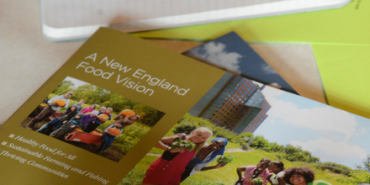
 One of the best examples of Kendall’s impact is at UMass Amherst where the foundation is behind a bold transition, made possible by one of the many strategic food system grants they have made throughout New England. This campus has a total food budget of more than $21 million. With help from the Kendall Foundation, they have made a firm commitment to sourcing food thoughtfully, using local whenever possible, with back-up defaults to regional sources and those using “sustainable, humane and organic sources.” This effort resulted in a 38% increase in local sustainable food purchases by the largest university in Massachusetts.


 Storytelling is a powerful tool for change. The right stories—shared well—have unlimited potential to raise awareness and resources, and inspire action. How many of your grantee partners are sharing their stories in a strategic way? And how can you, as a funder, support your partners in sharing stories that matter?

 In 1989, the state of Louisiana passed a
 As one of the country’s largest providers of social services,
