Think Like a Designer for Greater Impact in Philanthropy

By Nadia Roumani, Stanford University’s Center for Philanthropy and Civil Society (PACS)

I have spent my career at foundations, nonprofits, think tanks, universities, and multinational organizations. I have enjoyed elucidating the root causes of complex problems, but I have been frustrated many times by the sector’s inability to generate effective solutions.

In 2010, I attended a Stanford alumni event, where I heard a professor speak about design thinking. I had a hunch that this methodology could be powerful in its applications to the work I and others were doing in this sector. Subsequently, as a partner and fellow at Stanford’s Hasso Plattner Institute of Design (aka the d.school), fellow at its Center for Philanthropy and Civil Society (PACS), and in other roles, I have been experimenting with different ways to bring this set of tools to the nonprofit sector.

What is design thinking?

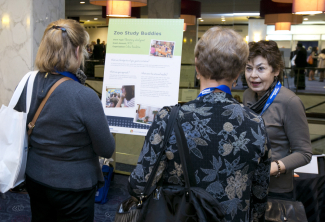
I describe design thinking as a fundamentally human-centered problem-solving method for tackling complex issues. Also known as human-centered design, design thinking forces a deep focus on the targeted beneficiary to truly understand his or her explicit and implicit needs.

Observation, immersion, and interviews provide context and insights into behaviors. These learnings contribute to a refined focus, or reframing of the problem, which, in turn, leads to more precisely targeted solutions. Prototypes are then built and tested with beneficiaries to challenge assumptions, learn more, and rapidly surface new solutions.

Much of what has been written to date about this method’s use in the nonprofit sector focuses on its value in helping people identify creative ways to find solutions, often captured in images of white board brainstorms with colorful post-it notes. I believe design thinking’s true power lies in its ability to focus and reframe a problem in a way that is truly meaningful to the beneficiary, and therefore ensure the problem is one worth solving.
Continue reading →

Get Inspired by Stories of #OutsizedImpact

By Henry Berman, Exponent Philanthropy

Tomorrow is National Philanthropy Day®, a day to recognize the contributions that philanthropists like you are making in communities across the country and around the world.

Colina FoundationWe’re celebrating by launching an #OutsizedImpact Twitter campaign to share stories of how our members are leveraging their dollar and non-dollar resources on behalf of society’s most pressing challenges. 

Get inspired by dozens of stories of outsized impact from members including Americana Foundation, Bernardine Franciscan Sisters Foundation, Chino Cienega Foundation, Colina Foundation, Enchanted Life Foundation, and many others. The stories were originally presented as part of the 2014 National Conference Hall of Outsized Impact, and we want others to know about them. 

Watch this video to learn more about what members have to say about the impact of Exponent Philanthropy’s member community.


I hope you’ll take part in the #OutsizedImpact campaign. Here’s how.

Continue reading →

Are You Prepared for Philanthropy’s Common Transition Points?

By Hanh Le, Exponent Philanthropy

Your philanthropic journey is sure to be a remarkable one: often cyclical, rarely linear, and greatly shaped by your particular circumstances.

Are you prepared to navigate the twists and turns that are sure to arise over time? Our nearly two decades of experience working with, listening to, and observing philanthropists with few or no staff suggests seven transition points common in the philanthropic journey.

Selecting a philanthropic vehicle. There are many options for structured giving, and your choice will influence your impact, your governance and administration, and your tax advantages. Trusted philanthropic advisors are often integral to these choices, and to putting into place the vehicles you choose.

Finding a focus. Taking time to focus can help you clarify what you want to achieve and measure progress toward your goals. Many funders focus on a particular field of interest, population, or geography. Others focus by strategy (e.g., building technology capacity) and bolster a range of grantees by applying those strategies. There is no one right way to settle on a focus, and many funders consider a combination of factors to determine theirs, including passions, values, and critical community needs. See the article “Choosing a Focus”

Continue reading →

Why We Focus on Learning

By Janis Reischmann, Hau’oli Mau Loa Foundation

When I joined Hau’oli Mau Loa Foundation in 2008, the board and I realized that we could leverage our grants by promoting learning among ourselves and our grantee partners.

  • A learning mindset makes it possible for our ears to be attuned to input.Because we strive to approach everything as an opportunity for new insights, different approaches, and helpful tips, we have made many improvements in the way we do our work. From the simplest—asking what we could do better after every event with groups of grantee partners—to developing an evaluation framework grounded in learning, we are routinely getting input that informs our work. When we conducted our first grant partner satisfaction survey, we learned that we needed to do a better job of understanding the communities that our grant partners are working in. That has promoted us to do more site visits and to ask better questions about community conditions.
  • I believe our grant partners are more open about their learning, in part because we are more open about ours.They call with stories of success, of course, but we also get regular calls when there are problems. For example, a group of four organizations that are working in a similar field with similar types of young people have asked us to convene a discussion for them on lessons learned from challenges. Two of the groups have volunteered to kick off the discussion and model the value of talking about what hasn’t worked.
  • An atmosphere of openness to learning promotes essential dialogue among our grant partners in so many ways.For example, through regular review of partner work plans, we noticed that three of them were planning to revise their intern­ship programs over the next year. We asked if they’d like to come together to share their experiences, and, after the first session, they planned to do it again because it was so valuable.

Continue reading →

Program Notes: Takeaways on Year-End Giving, Philanthropic Trends

By Lauren Kotkin, ASF

Two recent ASF programs surfaced some great takeaways. See our Educational Programs calendar for upcoming in-person programs, conference calls, and webinars that may interest you.

End-of-Year Giving Starts Now

January is the perfect time to start thinking about end-of-year giving. This was a key and seemingly paradoxical takeaway from our December 10 webinar with The Center for High Impact Philanthropy.

Continue reading →

A Little Housekeeping May Boost Your Impact in 2014

by Prentice Zinn, GMA Foundations

This post was originally featured on GMA Foundations’ blog. GMA Foundations works with individual grantmakers and private, corporate, and community foundations to establish and achieve philanthropic goals. 

The Association of Small Foundations’ website hosts a helpful checklist of annual foundation board to-dos, describing the various financial, legal, governance, grantmaking, and administrative tasks that foundations should undertake each year.

Like all housekeeping chores, however, some of the more difficult tasks may get neglected. Updating grant policies is one of those. Critiquing your own work is not easy. Nevertheless, setting aside a little time to validate and question your foundation’s transactional practices is a great way to recalibrate, to maximize impact.

Consider adding these three hard grantmaking policy questions to your foundation’s housekeeping list for 2014:

Funding duration: Does one size fit all? Nonprofit leaders are known to question foundations’ seemingly arbitrary limits on the duration of funding. For example, what is the logic behind policies requiring that grantees take time off from applying for funding from a foundation?

Continue reading →

Reflections on Impact

By Gerald P. McCarthy, formerly of Virginia Environmental Endowment

Gerald (Jerry) McCarthy recently retired after serving for 36 years as executive director of Virginia Environmental Endowment, a private grantmaking institution whose work focuses on environmental conservation. Jerry participated in ASF’s Impact Working Group since its creation in 2011, and we asked for his reflections on ways to give big while staying small, working with few or no staff to achieve outsized impact.

Having participated in the ASF Impact Working Group for several years, I can attest to the value of thinking about and talking about and prioritizing your philanthropic impact. Once you are clear about where and how you want to make a difference—and no, you cannot skip this step—you will be amazed at the opportunities you suddenly see right in front of you.

First, there is more than one way to achieve impact. In simplest terms, impact means making a real difference with the limited funds you have available for the causes you believe in most strongly.

One traditional way to do this, especially at the local level, is to determine which organizations are doing the most good for your community’s quality of life. Find out who they are and support them generously and often. If yours is a general purpose fund, this approach makes a lot of sense. You still have to undertake the due diligence to determine which groups are “the best” at what they do, but, once done, you can invest in them and thereby make a difference in your community.

Another way, for those who are focused on particular fields of interest, involves leveraging your grant funds and your ideas in ways that allow your limited funds to work harder and go further, multiplying the impact they can have.

Continue reading →

Strategic Doesn’t Have To Be a Bad Word

By Sara Beggs, ASF

The fundamental tenets of strategic philanthropy are that funders and their grantees should have clear goals, strategies based on sound theories of change, and robust methods for assessing progress toward their goals.—Paul Brest, former president of the William and Flora Hewlett Foundation and advocate of strategic philanthropy 

Recent debates among philanthropic thought leaders question whether a strategic approach to philanthropy will indeed create the greatest impact. To process and evaluate the criticisms, Janis Reischmann, executive director of Hau’oli Mau Loa Foundation and member of ASF’s Impact Working Group, worked through the common critiques. Here’s where she landed.

Critique: When we practice strategic philanthropy, we’re closed to new ideas.

I do think there’s a discipline in practicing strategic philanthropy that requires one to stay the course, but that doesn’t mean that within “the course,” new ideas won’t surface and emerge. Also, if there’s a mechanism in place for getting feedback and making mid-course adjustments, we should be innovating and adding ideas regularly.

Continue reading →

Impact Takes Intentionality

By Sara Beggs, ASF

Over the past 5 years, 70 committed ASF members have explored the path to impact in small-staff philanthropy and worked to make impact more accessible to funders. We’re delighted to share some of the Impact Working Group’s insights in this and future posts, and in a section of ASF’s website dedicated to achieving impact.

Are you achieving the results you intend from your investments of dollars and time? Are you applying a key ingredient: intentionality?

Intentional funders are thoughtful and purposeful. They know that achieving impact takes knowledge, planning, tough choices, good relationships, and often more than money.

Continue reading →

Convince Your Board to Pursue Greater Impact

By Sara Beggs, ASF

If we’re not actively pursuing real impact with everything we’ve got, we’re simply processing paper and redistributing assets. Why settle for that when we can see and participate in real change?

—Emily Hull-Parsons, The William McCaskey Chapman & Adaline Dinsmore Chapman Foundation

I bet you’re convinced that your foundation can accomplish more with its giving, or you probably wouldn’t be reading this post. I also bet that at least one key individual at your foundation is not convinced.

So how do you shift doubters to the camp of “we can accomplish more with our giving”?

Continue reading →