By Andy Carroll, Exponent Philanthropy
I regularly explore trends influencing philanthropy by spotlighting articles, reports, and essays in the media. I cast a wide net, venturing beyond philanthropy and traditional topics to consider a variety of ideas, innovations, debates, and critiques. Read previous posts in the series
Slowly, inexorably, like the rise of inequality itself, the United States has come to recognize the depth and breadth of economic hardship across its communities. CEOs of major corporations and presidential hopefuls from both parties—Republicans and Democrats—have added their high-profile voices to growing distress about widespread poverty and deprivation, rising income inequality, diminished social mobility, and the expanding achievement gap between poorer and wealthier children. The issue has become bipartisan, mainstream, and a constant in public discussions.
Why has hardship reached the spotlight now? Several developments have come together:
- The persistence of widespread and deep poverty, despite recent job growth, and regular reporting of hardship in national and local news;
- The finding that many new jobs do not pay enough to keep families above the poverty line;
- The growing gap between rich and poor, and regular reporting of this trend in the media;
- Studies that show rates of poverty and child poverty in America higher than those in most other developed nations around the world;
- Research on brain development that illuminates the damaging, long-lasting impacts of economic stress on children, raising concern that the future for millions of American children is being compromised;
- Widespread acknowledgement, after years of questions, that deprivation does play a major role in limiting students’ ability to learn and meet benchmarks for educational attainment.
Child poverty in particular has garnered widespread attention as an urgent moral challenge for the nation.
There is growing recognition that left unchecked, hardship will expand, creating the conditions for even greater inequality.
Let’s explore these issues through recent articles.
The Deep Costs of Child Poverty in America
John D. Sutter, a writer at CNN, recently examined child poverty by focusing on hidden poverty in Silicon Valley, California. America has the developed world’s second highest rate of child poverty, with 1 in 5 children living below the federal poverty line. Only Romania is worse. In Silicon Valley, where housing prices have skyrocketed, two parents can work full time and still be homeless. Children growing up in poverty suffer toxic stress and are more likely to drop out of high school, go to jail, have kids out of marriage, experience lower IQs, and end up poor as adults. The costs nationally are estimated to be $500 billion a year, in economic losses, health care, and crime. Sutter asserts that child poverty is a moral issue as well as an economic and humanitarian one, because children have no power over their economic circumstances, and the consequences of poverty are likely to limit their opportunities and incomes throughout their lives. He highlights four proven strategies, which would cost less than the $500 billion that poverty exacts each year: housing subsidies, raising the minimum wage, expanded and affordable early childhood education, and cash for poor families.
Continue reading →
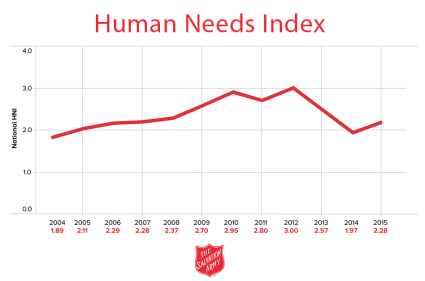 Poverty is one of the trickiest social issues to define, understand, and alleviate because of its complexity: it affects many aspects of life in a uniquely vicious cycle. But only when it is properly defined and understood can effective action be considered. Nonprofits need to deeply understand the issues they are working to solve; just as important, their funders need reliable tools for smart decision-making and accountability.
