 By Lauren Kotkin, Exponent Philanthropy
What if you’re not good at accounting? Does that mean you get a pass on managing your foundation’s budget? Of course not.
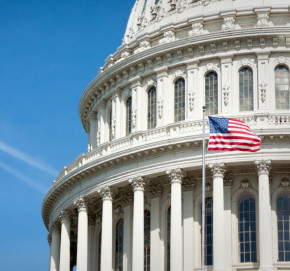
Like accounting, advocacy is part of your job as a funder. This analogy was offered at Foundations on the Hill (FOTH), last month’s annual philanthropy advocacy days on Capitol Hill, hosted by the Forum of Regional Associations of Grantmakers in partnership with the Council on Foundations.
Walking the halls of Congress or even the local mayor’s office can certainly be intimidating. But keep in mind that philanthropy and government are a natural fit. Both parties are working toward the same end goal: robust support to help people and communities thrive.
Whereas Congress has placed restrictions on foundations in terms of lobbying for specific legislation, foundations can certainly speak to elected officials about issues important to them and their communities.
FAQs on foundation advocacy & lobbying
At FOTH, I joined delegations from the Southeastern Council of Foundations, Council of Michigan Foundations, and Philanthropy New York for meetings with their federal legislators and staff. The goal is to build relationships and share ways that funders can help legislators in your region, state, county, or town.
Here’s some of what I learned about advocacy work:
- What do legislators want to know? Legislators at the federal and state levels want to know how they can help keep philanthropy vibrant in their communities, solving issues affecting their constituents. In one meeting, while discussing rules for donor advised funds, a new senatorial legislative aide said he did not know what donor advised funds are. An opportunity to educate! The funders explained what community foundations and DAFs do and how they help communities.
- What do legislators ask? They did not ask a lot of questions; in fact, most of what they do is listen. They listen to the funders share what’s important to the philanthropists in their district or state. If you work close to the ground and know the community, you have a lot to offer.
- How did the funders prepare? Regional associations set up legislative meetings to make the most of their two days in Washington. They also developed one-page fact sheets with key data about the nonprofit sector and giving in the legislator’s district. Some state delegations prepared additional resources to leave in congressional offices. Often, the delegation worked with their state’s nonprofit association to develop data on the sector in easy-to-digest formats.
- What materials did the funders bring? The rule of thumb is to bring your business card and at least a one-page handout to leave with aides. One congressional aide reinforced the importance of leaving paperwork behind. Every visitor’s business card and leaflet are saved and recorded. When legislative aides are working on an issue, they often turn back to that paperwork for information. Legislative aides meet daily with many constituents, and one wonders, “Does it matter?” But, as an aide said, “Thank you for coming. It’s better than an email.” In person visits put faces to names and make it easier for aides to reach out when the time comes.
Philanthropists are encouraged to engage with policymakers at all levels of government. If you can’t make it to Washington or your state house, reach out to your town or county officials. Invite them to a board meeting or a grantee convening, or invite them to speak at a conference you are organizing. Many funders during FOTH shared success stories of public-private collaborative funding projects germinated by the relationships funders created with elected officials.
So keep legislators informed of both the good work and the needs in your jurisdiction. Remember, we are fortunate to live in a democracy governed by the people and for the people. It’s an integral part of your role as a foundation leader to make your voice heard.
Related resources
Funding and Engaging in Advocacy: Opportunities for Small Foundations, an Exponent Philanthropy primer (free for member download; available for non-member purchase)
Bolder Advocacy, an initiative of Alliance for Justice, which offers a set of resources specifically for foundations
Related posts
How to Win Friends and Influence Public Policy Without Lobbying
Small Foundations Embrace Advocacy to Catalyze Change
Foundation Leadership: Mobilizing Support to Protect Public Health
 Senior Program Director Lauren Kotkin plans a range of educational programs for the Exponent Philanthropy community, including conferences, webinars, and conference calls. She also dedicates a portion of her time to managing our resources on investments. Previously, she worked at the Council on Foundations in the Family Foundation Services department. Lauren holds an undergraduate degree from Duke University and an M.Ed. from Lesley University.
