Voices of Emerging Leaders in Philanthropy

By Stephen Alexander, Exponent Philanthropy

Join me to explore the values and visions of emerging leaders of a social-minded generation. Below is an excerpt from my recent conversation with Kerry McHugh, vice president and program officer at the Helen J. Serini Foundation, and 2014 Exponent Philanthropy Next Gen Fellow. 

Kerry McHughYour foundation is relatively new. What are you most proud of so far?

We were founded in 2012, so our first grants were made in 2013; 2014 was our first full year of grantmaking. Just in those first two years, we’ve really honed in on our mission and made sure that our grants tie back to what we want to achieve in our community. We fund organizations that provide opportunities for at-risk and low-income youth and their families; that’s a broad subject to begin with, but even over the past 18 months, our focus within that umbrella has become much stronger. Obviously, we’re far from perfect, and we’ve got a lot of work on focus and impact ahead of us.

It takes a lot to focus. Our foundation reached a point relatively quickly where the number of grant applications surpassed our annual grantmaking budget. When you get to the point where you have to start turning people away, it forces you to focus on your mission.

What do you enjoy most about your work?

Right now, because the foundation is so new and I’m new to philanthropy (joined the foundation in 2014), I’m enjoying the learning aspect: looking for resources related to philanthropy and best practices in grantmaking, and even more so getting to know the nonprofit community in Maryland. It’s amazing the work that people are doing to improve their communities across the state, and I’m constantly astounded by the number of organizations out there I never knew existed.

It’s really impressive and exciting how welcoming those in philanthropy have been. Those who have been doing this for years have been really accepting of me as a newcomer, and couldn’t be more excited to share experiences and knowledge. I’ve worked in other industries where the opposite is true, with high levels of competition making people hesitant or unwilling to share their knowledge. In philanthropy, I’ve found there’s a sense of being in this together as a community.
Continue reading →

The Pulse: Unexpected Givers, 2014’s Big Ideas

By Andy Carroll, Exponent Philanthropy

I regularly explore trends influencing philanthropy by spotlighting articles, reports, and essays in the media. I cast a wide net, venturing beyond philanthropy and traditional topics to consider a variety of ideas, innovations, debates, and critiques. Read previous posts in the series

Wealthy Donors Seek Long-Term Solutions to Poverty, Hardship

The desire by donors to address the root causes of poverty and economic hardship is a trend that has only intensified during an era of recessions, economic crises, and rising income inequality, according to a study tracking giving by ultra-high net worth individuals by Wealth-X and Arton Capital. The authors of the report write, “It is not enough to help fund new schools, fund access to digital technology or provide sufficient nourishment if it does not lead to longer-term, lasting improvements to socioeconomic conditions. Individuals with education but no opportunities will not be lifted out of poverty: they need access to opportunities for employment in wealth-generating projects.” 

New Study Finds Unexpected Source of Giving: Young Women

A new report by Indiana University contributes insight into women’s philanthropy, an arena of giving growing in scale, scope, and influence. The Chronicle of Philanthropy’s Drew Lindsay writes,

“Conventional wisdom says young Americans are not as generous as older generations, particularly if they’re not religious. That may hold true for most donors, says a new report, but younger women appear to be bucking the trend. Millennial and Generation X women who are single and unaffiliated with a religion give two-and-a-half times more money to charity than their older, similarly secular counterparts, according to the report, which looked exclusively at unmarried donors. Their giving also doubles that of peers who have loose ties to a religion.”

Big Ideas in Social Change

Journalist Tina Rosenberg looks across dozens of solutions to social problems profiled during the year in the New York Times “Fixes” column, and identifies three big themes.

Continue reading →

Voices of Emerging Leaders in Philanthropy

By Kellen MacBeth, individual donor and giving circle member

Last year, I attended an event at a local university where the author of a new book discussed the current model for American philanthropy: entrepreneurship/innovation leading to wealth accumulation leading to philanthropic giving.

I was struck as the author listed major philanthropists as trend-setters who, while accumulating their wealth, had contributed directly or indirectly to many of the same problems they would later give money to solve. After more research on the subject, I decided there had to be a better model.

Whereas it’s true that the capitalist system that defines the American economy has lifted large scores of people out of poverty and contributed to great technological innovations, it also has left millions of struggling people behind. Our philanthropic sector today relies on funding from many of the individuals and companies that, like the robber barons of yesterday, contribute to the environmental, social, and health problems it tries to fix. Can this system, which tacitly endorses the creation of problems as a key step in trying to fix them, truly work? I don’t think so.

Instead, we need foundations and nonprofits to work to reform the system and not just the problems it creates. We need a new model—beyond corporate social responsibility—wherein corporations are created, just like foundations, to help and not hurt people. Whereas the pursuit of profit and the influence of supply and demand will naturally remain a part of the new system, if we humanize our corporations, we can expect and receive more.

Continue reading →

Who Are the Emerging Voices in Philanthropy?

By Jessica Bearman and Sarah Deming, Bearman Consulting

For many funders, the idea that philanthropy is changing holds no surprise. Family philanthropy, corporate philanthropy, and community philanthropy already reflect changing demographics as younger donors join family boards; women and people of color lead philanthropic organizations; and donors of all types direct their personal wealth toward public good. To paraphrase cartoonist Walt Kelly’s Pogo: We have met the new philanthropist, and she is us.

At the same time, emerging voices in philanthropy still struggle to be heard. Existing grantmakers and established donors can seize the opportunity to amplify their impact by learning from these new giving styles, motivations, and passions.

All types of people from all walks of life have given generously throughout time—but, for many, an affiliation with mainstream philanthropy is a new development. Who are today’s nontraditional philanthropists, and what makes them different?

Today’s Philanthropists

Increasingly, women, younger donors, and diverse racial and ethnic groups are claiming their spots at the table as significant givers, drawing on longstanding traditions and forging new ones. At the same time, philanthropy is no longer just for the affluent; people at all levels of wealth are pooling their resources to achieve more impact with their giving.

Says Kelly Brown, director of D5, a 5-year effort to bring new voices to the philanthropic table, “An important part of philanthropy’s efforts to advance diversity, equity, and inclusion is to recognize the diversity within philanthropy itself. From peers and colleagues who are major donors to our shared causes to small giving circles in communities around the country, learning from and embracing the many ways all communities give can only strengthen our shared commitment to advancing the common good.”

Continue reading →

Put Your Point of View Into Play: 2014 National Conference Panelists Discuss Trends, Path to Solutions

By Courtney M. McSwain on behalf of Exponent Philanthropy

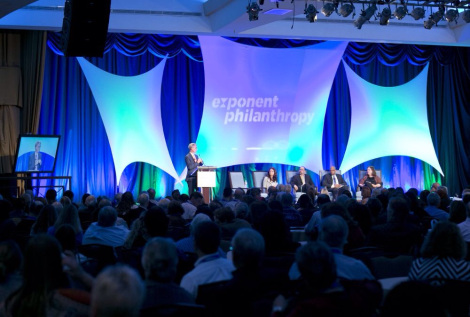
Changing U.S. demographic trends, advances in technology, political polarization, and geographic mobility all impact the way communities are addressing social problems today. This was the underlying message conveyed at Friday’s spotlight panel, on the second full day of Exponent Philanthropy’s 2014 National Conference.

2014 National Conference spotlight panelPanel moderator Michael Dimock, president of the Washington, D.C.-based Pew Research Center, set the framework for the morning’s discussion by outlining social trends affecting philanthropy. The influence of Millennials was among the biggest trends discussed, especially the way younger citizens leverage technology to work outside of the walls of traditional institutions.

“Millennials want to see change, and they don’t care where the change is coming from,” said Gabriel Kasper, senior manager at the Monitor Institute.

The expert panel agreed that technology shifts, in many ways, facilitate Millennials’ ability to form nontraditional communities of change as well as create entrepreneurial approaches. “Millennials are bringing an entrepreneurial sprit to problem solving,” said Kim Jordan, co-founder and CEO of New Belgium Brewing and founder of the New Belgium Family Foundation.

Moreover, technology broadens access so that marginalized segments of society can circumvent institutions that shut them out. James Shelton, deputy secretary at the U.S. Department of Education, offered the ridesharing program Uber as an illustration of this point. “People think of it as a very convenient ride, [but] for thousands and thousands of people, it is a new small business,” Shelton said.

Patty Stonesifer, president and CEO of Martha’s Table, furthered this point by noting that the spirit of Uber will ultimately deliver disruptive innovations in philanthropic service delivery. “What’s the Uber of matching our excess food with families in need?” Stonesifer asked. “Technology can change the whole system…we’ve only scratched the surface of this.”

Continue reading →

Voices of Emerging Leaders in Philanthropy

By Stephen Alexander, Exponent Philanthropy

Join me to explore the values and visions of emerging leaders of a social-minded generation. Below is an excerpt of my recent conversation with Ebonie Johnson Cooper, Chief Millennial Officer at Friends of Ebonie, freelance writer, and professional coach.                                                      

Ebonie Johnson CooperWhat are you currently working on?

I’m working on an online education and training initiative called the Young, Black & Giving Back Institute. My work with the Changing the Face of Philanthropy Summit helped me understand how vital education and training is for young professionals. The recent events in Ferguson, MO helped me realize how quickly millennials can galvanize around a cause yet struggle to define desired outcomes or next steps. Education and training around civic leadership, social justice, and advocacy is clearly needed, particularly for young, black millennials. This program is designed to do just that. While the target audience is young, black millennials, these programs are open to anyone.

I’m also starting to coach young philanthropists. I believe having a guide with expertise in millennials’ unique style of giving is really valuable. I receive so many emails from people interested in fundraising projects or volunteering, but they’re not sure how or where to begin. Through coaching, I’ll assist individuals in mapping out an approach based on their values, passions, and interests.

What are you most passionate about?

I’m passionate about how my generation applies our potential. One of the challenges we often run into is getting to action. For example, let’s think about the situation in Ferguson. Plenty of people showed up to show their support. People were able to connect with one another easily through social media. But then what? What were the desired outcomes from that gathering? And who was the point of contact or group of people that they should engage in order to achieve those outcomes? I believe we’ll accomplish some exciting things once we figure out exactly how to overcome obstacles like this. 

What do you believe you and your generation bring to the table?

Our passion, our initiative to get things done, and a fresh perspective to a lot of issues. We approach things so much differently than anyone else. We bring passion to the table, and that’s what makes the difference in a board room. We’re not afraid to express ourselves. If there is a problem or opportunity, we’ll work hard to figure out at a solution.

Continue reading →

8 Organizations Developing Young, Social-Minded Leaders

By Stephen Alexander, Exponent Philanthropy

The Talent Philanthropy Project recently wrote a blog post about funders who invest in nonprofit leadership. Among the nine funders identified as leaders in this area were two Exponent Philanthropy members (Community Memorial Foundation and Meyer Foundation) and several partners.

This article got me wondering: What nonprofits in the social sector are developing and supporting talented, social-minded Millennials and Gen Z’ers? What organizations should be on the radar of these funders and others like them?

To start, here are 8 programs and networks investing in young leaders. They are inclusive, accessible, and pushing participants to think big about the future.

  1. Emerging Practitioners in Philanthropy (EPIP) – A national network with 12 chapters, EPIP works to develop leaders committed to building a just, equitable, and sustainable society. Chapters provide local learning and networking opportunities, and the national arm builds a voice for a generation aimed at transforming philanthropy.
  1. Fellowship for Emerging Nonprofit Leaders (Aspen Institute) – This program aims to provide nonprofit leaders with the tools and perspectives necessary for effective, enlightened leadership. Participants are given the opportunity to move beyond daily operational concerns to take time for the “blue sky” thinking and exploration of core values that animate their work and inspire them to become more effective, innovative, and inspiring leaders.
  1. Net Impact – Net Impact is a worldwide network with over 300 chapters and 50,000 student and professional members. They provide the network and resources to inspire emerging leaders to build successful “impact careers” – either by working in jobs dedicated to change or by bringing a social and environmental lens to traditional business roles.

Continue reading →

The Power of Community to Develop Young Leaders

By Janice Simsohn Shaw, Exponent Philanthropy

Last month, we kicked off the 2014 Next Gen Fellows Program, our second installment of a 6-month program to bring together young trustees and staff for learning, connecting, and mentoring. Just like our cohort of 2013 Next Gen Fellows, they are as diverse as any group in their passions, politics, priorities, and concerns. Yet when they come together, something magical happens. Their confidence rockets, and their collective energy, commitment to good work, and potential for difference-making follow suit.

Why is community so powerful in developing young leaders?

Philanthropy can be a lonely business. Whether you’re the only staff member in your 20s, or a sole next gen trustee or executive director, finding collaborators and honest feedback can be difficult. As one past Fellow shared, “Community has been an important professional development marker, given that I work at home by myself. Am I listening well enough? Being respectful of different opinions? Basically, playing nice with others? I haven’t been at this long enough that I have many professional relationships, so those that I do have are meaningful.”

Continue reading →

Millennial Voices in Philanthropy: Jessica Gonzalez

By Stephen Alexander, Exponent Philanthropy

Join me to explore the values and visions of emerging leaders of a socially minded generation. Below is an excerpt of my recent conversation with Jessica Gonzalez, program officer with Allegany Franciscan Ministries in Palm Harbor, FL. Jessica participated in Exponent Philanthropy’s inaugural class of Next Gen Fellows. 

Jessica GonzalezWhat is the most challenging aspect of your work?

We don’t have an endless supply of dollars. It’s really hard to say no to good nonprofits, hard to have difficult conversations. As foundations are thinking about how to use their funding more strategically, it has become increasingly important to have those difficult conversations. People are so attached to their mission in the nonprofit world that sometimes they take the rejection personally.

What does the Millennial generation bring to the table?

I don’t see it as “this is what we bring” versus “this is what they bring.” It’s about working together. It’s about coming up with new ways to move the bar forward and advance the mission.

We find so much inspiration outside of the office. For other generations, perhaps they get inspiration at the office. I get ideas at the gym, watching the World Cup, etc. We may not prefer the typical 9-5 job, but we’re going to get the job done. And we’ll continue to work past 5 p.m. We have conversations about seemingly random topics, and while it doesn’t sound applicable to work, more often than not it does lead back to something work-related.

Continue reading →

Millennial Voices in Philanthropy: Caroline Mullis

By Stephen Alexander, Exponent Philanthropy 

Join me to explore the values and visions of emerging leaders of a socially minded generation. Below is an excerpt of my recent conversation with Caroline Mullis, a program associate with the Coastal Community Foundation of South Carolina. In 2013, Caroline participated in Exponent Philanthropy’s inaugural class of Next Gen Fellows. 

caroline mullisWhat do you enjoy most about your work?

What I enjoy most is that I feel fulfilled by my work. Too many times I hear stories from my peers who are weighed down by their work and constantly feeling defeated. Although I may have those moments, there isn’t a day that I don’t walk out of my office feeling like I did something for the betterment of my community. I feel honored to be part of the long legacy that Coastal Community Foundation is leaving, and it inspires me every day to uphold the organization’s values.

What is the most challenging aspect of your work?

The most challenging aspect is being taken seriously or proving myself as a young professional in a field where we are scarce. In my position, I meet with both donors and nonprofits, often facilitating site visits with committee members. I know walking in to these meetings that my knowledge and/or experience is going to be questioned, and that only fuels me to be better prepared and more confident in my abilities. Despite being a decade younger than most colleagues, knowing that I have their unwavering support gives me the motivation to go into these situations with confidence. People tend to forget that young professionals can have fresh ideas and perspectives to share and that we are knowledgeable enough to understand philanthropic and organizational history.

What do Millennials bring to the table?

My generation and I bring to the table a new outlook on life and careers. Although we may be less concerned with face-to-face interaction, we are more connected to one another than previous generations. We quickly and easily share our thoughts and opinions and, in turn, are more tolerant of opposing ideas. I believe this idea sharing has made us a more collaborative generation who has learned to accept different opinions.

We also grew up in an era when community service was not only encouraged, it was often required. I believe this has led us to have a concern for our community engrained within us, which spills over to the workplace. I have read countless times that Millennials are less concerned with making money and more concerned with meaningful work. Whether I was aware of it or not, I am proof. As Millennials begin to take on leadership roles in their careers, I believe a shift will happen to produce more collaborative and tolerant workplaces where idea sharing is imperative.

It’s frustrating when Millennials are labeled as greedy, uninterested, and unmotivated. This isn’t the first time a generation has been mislabeled, and I’m sure we’re guilty of it too. It shows how misunderstood people can be, and if we took more time to get to know people’s core values, we’d be better for it.

Continue reading →